My favourite place to go in my city is Jaycee Gardens Park. It is a nice 3k walk to Port Dalhousie where you can walk on the pier and see Toronto as shown in the video below. You also walk past the lake where there are often regattas and I’ve seen so many birds during the summer. It’s also dog and kid friendly.
Can you share a positive example of where you’ve felt loved?
I worked at a job that started as a 6 week contract that kept getting extended. Now the person I was covering for eventually came back and the company looked for a way to evolve my role. I know it’s cheating and that isn’t really a positive example of “feeling loved” but it is a positive example of feeling appreciated in the workplace which I think on this internet of ours is a rare occurrence.
As we enter 2025, I didn’t make a New Year’s resolution but I decided to trust: trust people, trust the process and most importantly trust myself. I am starting a new blog collection, based on the current labour market and I will start with this as our foundation “Asking your work if they are laying people off is like asking a man if he would ever cheat on you or a woman if she likes money” . . . If you like go and argue with your ancestors
An intro to the Labour Movement is in Shambles – An examination of work in 2025
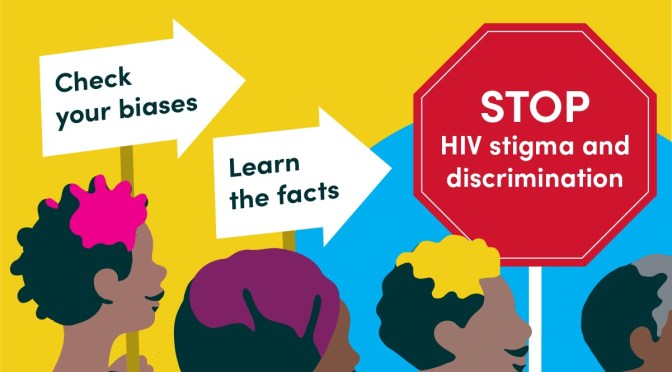
“In 2023, 630 000 [500 000–820 000] people died from HIV-related causes globally. Since 2010, HIV-related deaths have been reduced by 51%, from 1.3 million [1.0 million–1.7 million]. The global HIV epidemic claimed 69% fewer lives in 2023 since the peak in 2004.
76 000 [53 000–110 000] children died from HIV-related causes in 2023.
560 000 [430 000–730 000] adults died from HIV-related causes in 2023.
HIV continues to be a major global public health issue, claiming 42.3 million [35.7–51.1 million] lives so far.”
Global trends in people acquiring HIV and people dying from HIV-related causes, 2010-2023 and projections to 2030
This post seems very timely as it is the anniversary of my podcast. Happy 6th birthday to my podcast, yes I promise this is connected to my contribution to my community. I wrote a while ago about how it’s hard to stay consistent in content creation and that has been true not only in my blogging but in the recording of my podcast.
I love reading and to be fair after university it has become difficult to read fiction. I primarily read non-fiction and so most of what I read I feel the arrogant need to share with others for their own good. At some point I realized that unlike at university life is not a seminar and generally people are not interested in debating or learning more. The only people that may be interested in debating you are on twitter and to be fair they are not doing so in good faith nor are they actually interested in the ideas you are trying to share.
I read a few things and listened to a lot of podcasts and my conclusion is explained best by Seneca who says “I am acting on behalf of later generations. I am writing down a few things that may be of use to them.” The older I got I realized that as a black woman there are so many things that I did not know that impact my life, my community and a little guidance may have prevented a lot of things or at least helped in the understanding of many things. So while I was learning more things about finances, voting, colorism or just nutrition, I figured I would write down what I am learning because even though people may not be open to what I have learnt at the moment there will come a time when they will be and at that point I would have written and recorded a few things for them.
My contribution to my community is the things I am learning and even though if often feels like it is falling on deaf ears, I continue because of the chance that a young black woman may wish to know why is it important to budget, hold political parties accountable and so she knows that someone grappled with the same questions and they took some notes for her to use, update or disregard.
My involvement in my community is sharing knowledge that they may not realize they need yet.
I will start this post with the full acknowledgement that I should be and am grateful for all the blessings I have, but seeing is the post is not an ode to my lack of gratitude I will say the thing I complain most about is work. I am an advocate of the labor movement and am of the belief that “the labor movement is in shambles” so I find myself often complaining about different elements of work.
My favorite and timely complaint is the mandatory return to office. Wait hear me out. I know this is somewhat of a first world and white collar worker problem to have but still its emblematic of a larger problem between workers and employees. The issue is never if the work is done because when work is isn’t done there are many different metrics that employers have figured out to calculate efficiency. In fact if you fall below an adequate level of efficiency I believe they do something they call “firing you”. No the problem is not that work will not be done. The problem is trying to control employees time so if they are able to complete the required tasks in an adequate manner you figure out a way to pile more tasks on without paying them anymore. God forbid they use the extra time to spend with their family, friends or figuring out how to make additional income.
That brings us to the second thing I like to complain about. Much like what we keep hearing about inflation “it’s going down”, “we have brought it to an adequate level”, we should be really happy we are paying $20 for cooking oil our wages may be “up” but it seems like we still can’t afford rent, houses or the $20 cooking oil yet at every turn we are told wages are higher than ever and we should be happy and grateful. So we may not be the greatest mathematicians but we can do the maths and see that the amount that we are getting paid and the profits we are helping make don’t add up.
To conclude, I like to complain about the state of employee rights in this current economic climate







 TIGERE.CA